
Dopamine, Addiction & Electronics
Dopamine, Addiction & Electronics
A Parent Guide to Understanding Your Child’s Brain & Digital Use
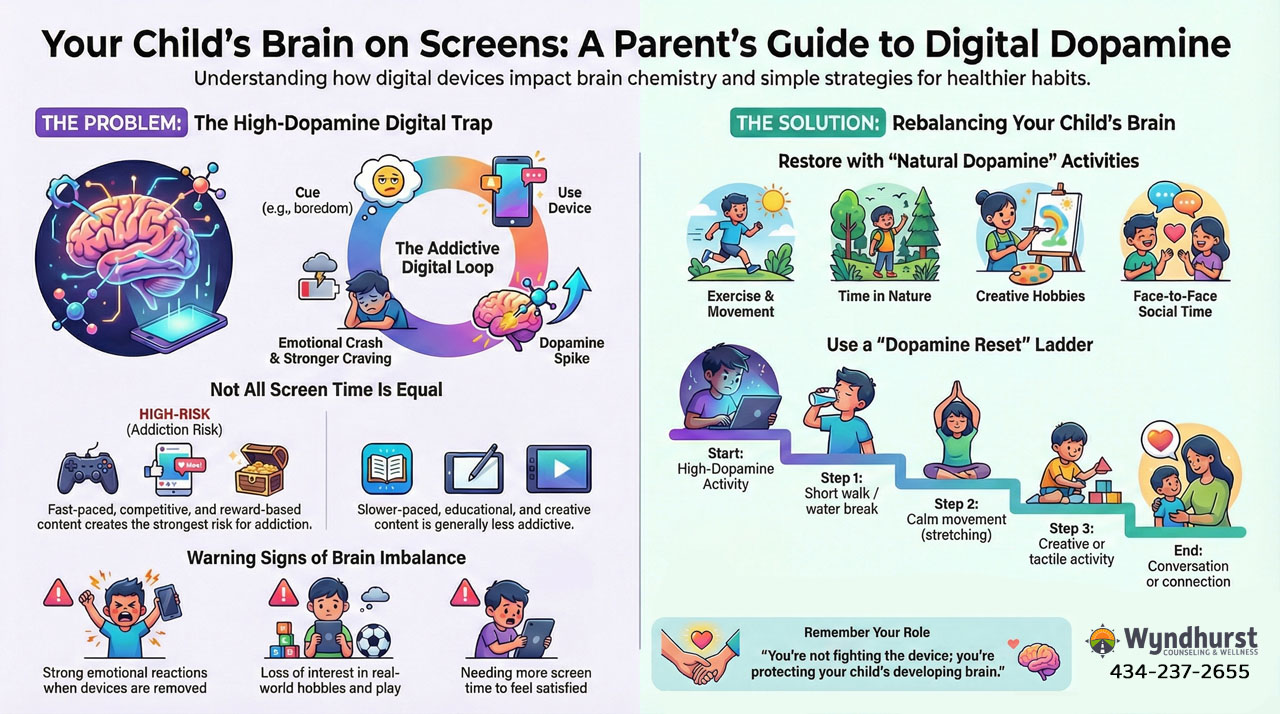
What is Dopamine?
Dopamine is a brain chemical that drives motivation, pleasure, and learning. It’s not just about “feeling good”, it teaches the brain what to repeat and crave. When dopamine spikes happen too often and too intensely, the brain starts to:
- Lose interest in normal activities
- Become more impulsive
- Need more stimulation to feel good
- Feel irritable or bored without screens
THE DOPAMINE CYCLE
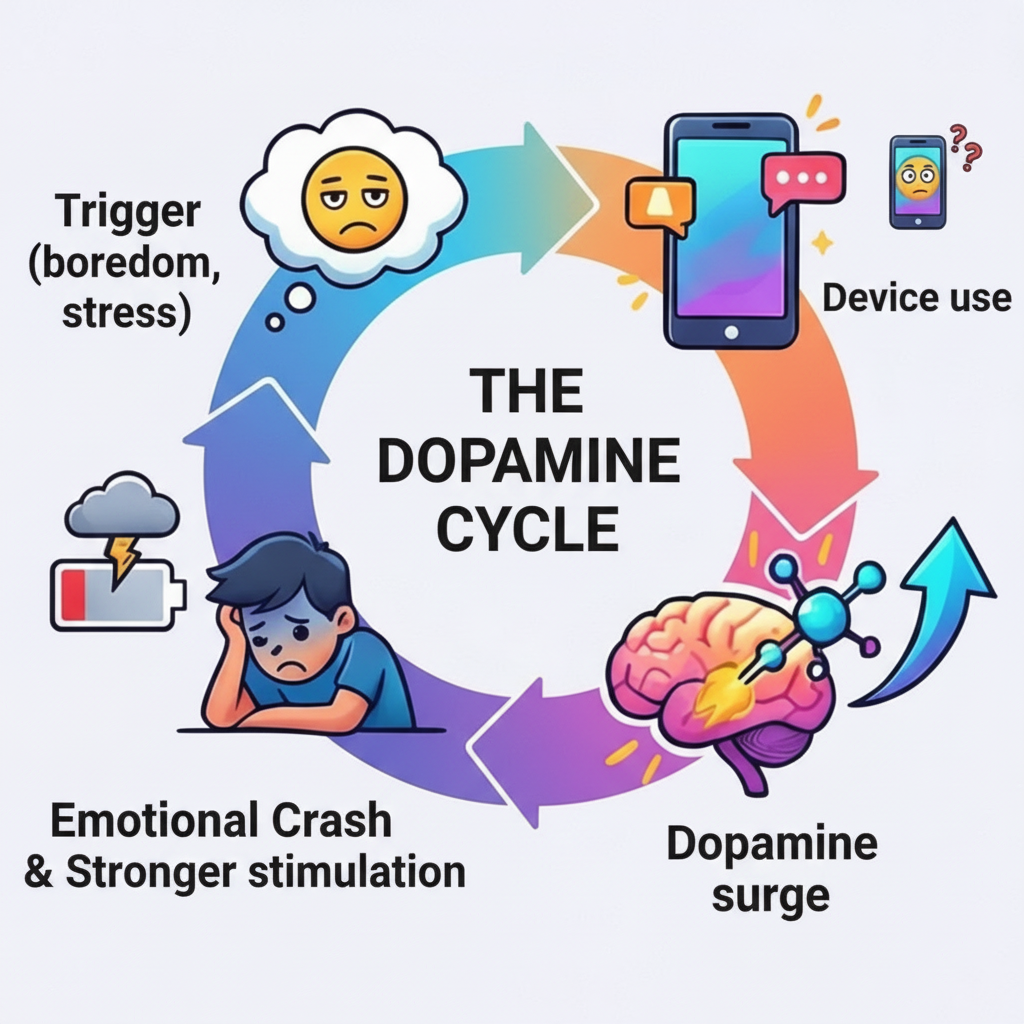
This is why kids become:
- Easily bored
- Irritable when screens are removed
- Less motivated for school, chores, hobbies
Digital Dopamine Scale (Low ? High)
LOW DOPAMINE / HEALTHIER DIGITAL (slow, calmer brain activation)
These allow the brain to engage without flooding it:
| Level | Activity Type | Examples |
|---|---|---|
| Very Low | Creative / Passive Use | Drawing apps, music creation, slow-paced puzzle games |
| Low | Educational | Documentaries, coding games, learning platforms |
| Moderate | Calm Entertainment | Nature videos, audiobooks, simple storytelling games |
HIGH DOPAMINE / HIGH RISK DIGITAL
These create rapid, repeated dopamine spikes and stronger addictive patterns:
| Level | Activity Type | Examples |
|---|---|---|
| High | Fast-Paced Stimulation | YouTube Shorts, TikTok, Instagram Reels |
| Very High | Competitive / Reward-Based | Fortnite, Call of Duty, Roblox competitive servers |
| Extreme | Gambling-Style Mechanics | Loot boxes, skin drops, in-app purchases, scrolling feeds |
Why Certain Media Feels “Addictive”
High-dopamine digital activities use:
- Endless scrolling
- Fast rewards
- Bright colors
- Loud sounds
- Social validation (likes, wins, rankings)
This trains the brain to expect constant excitement, making normal life feel dull.
Warning Signs of Dopamine Dysregulation
Parents may notice:
- Strong emotional reactions when devices are removed
- Loss of interest in real-world play
- Irritability, anxiety, or restlessness without screens
- Staying up late thinking about games/videos
- Needing longer screen time to feel satisfied
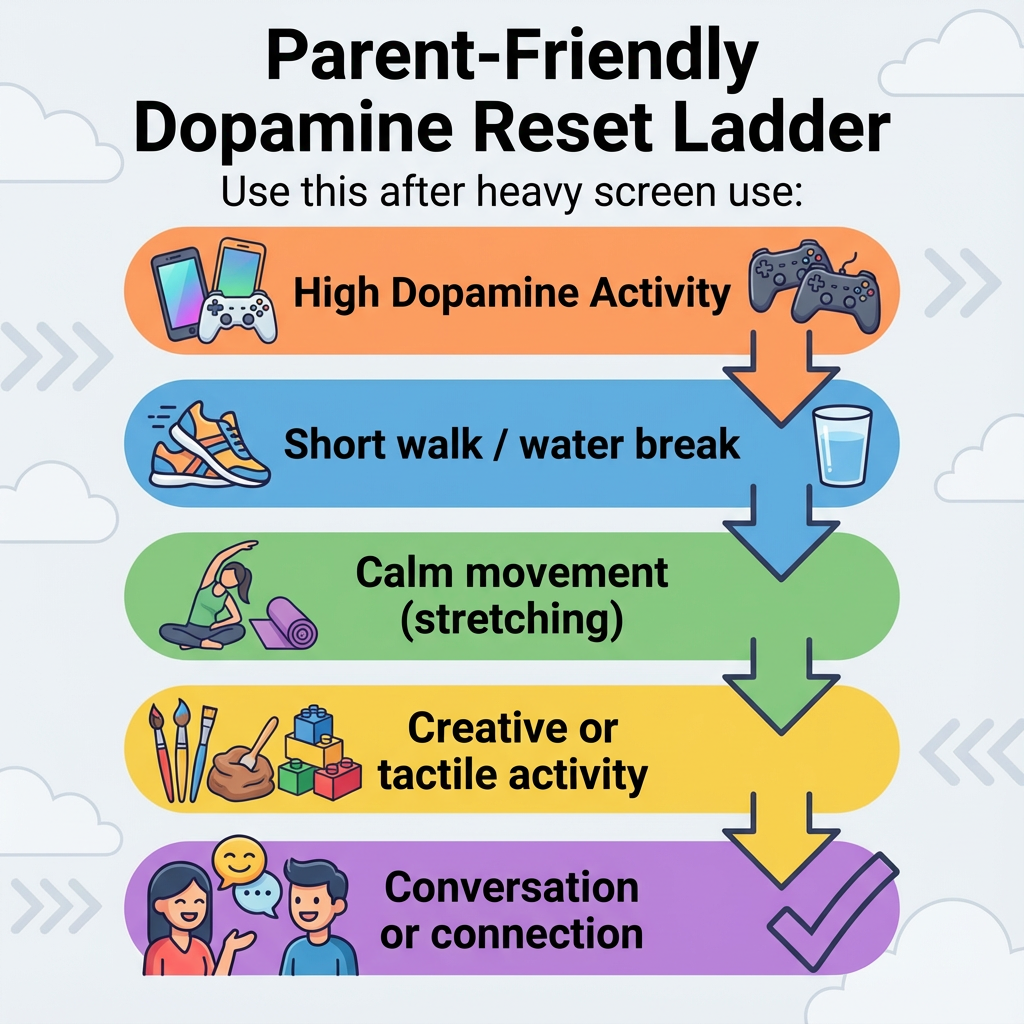
Healthy Dopamine Restoration (What Rebalances the Brain)
“Natural Dopamine” Activities
These rebuild healthy brain chemistry over time:
| Activity | Why it helps |
|---|---|
| Exercise / Movement | Releases steady dopamine naturally |
| Time in nature | Calms nervous system |
| Creative hobbies | Builds focus + satisfaction |
| Social time | Creates oxytocin + dopamine balance |
| Healthy sleep | Resets dopamine receptors |
Healthy Boundaries Framework
Instead of “no screens ever”:
- Teach balanced use
- Protect the brain
- Build tolerance for boredom
Parent Scripts:
- “I’m protecting your brain, not punishing you.”
- “Screens aren’t bad — but your brain needs variety.”
- “Boredom builds creativity.”
Resource Links for Parents
Neuroscience & Dopamine Education
- https://www.addictioncenter.com/drugs/dopamine/
- https://www.childmind.org
Digital Addiction Awareness
Books for Parents
- Dopamine Nation – Dr. Anna Lembke
- Glow Kids – Dr. Nicholas Kardaras
Key Parent Reminders
You’re not fighting the device, You’re protecting your child’s developing brain.
This is about brain health, emotional regulation, and long-term resilience, not control.
Help Your Child get on the road to feeling better
If you are interested in finding out more about how you can help your child with Digital Addiction, please call us at 434-237-2655, and let us help you get on the road to feeling better.

Bailey Lanier
Bailey Lanier is a Licensed Professional Counselor who works with individuals, couples, and families navigating anxiety, trauma, life transitions, and developmental challenges. She is a certified anxiety and trauma treatment provider with advanced training in Trauma Focused Cognitive Behavioral Therapy and Motivational Interviewing. Bailey draws from skills based counseling, Family Systems work, and CBT to support holistic healing.
Her experience spans schools, inpatient settings, outpatient care, and university teaching. She has also invested years serving families through her church and missions work. Outside the office, Bailey enjoys time outdoors with her husband, their two sons, and two bonus children.