
Discipline Equals Freedom:
Discipline Equals Freedom
Discipline Equals Freedom: A Mental Health Perspective Going Into the New Year
As I was rucking and walking my dog in 20-degree weather, listening to the Jocko Podcast, I was deeply impacted by an episode titled “You Don’t Get One More Minute.” It stayed with me long after the walk ended. As we approach a new year, a time when many people are reflecting on how they want to live differently, I felt compelled to share these ideas here as both motivation and grounding.
If you’re not familiar with Jocko Willink and his work, I highly recommend the Way of the Warrior Kid book series, especially if you have children. I read the entire series with my youngest son, and honestly, I got just as much out of it as he did. Those books were my introduction to Jocko’s philosophy. Since then, I’ve read Extreme Ownership and regularly listen to his podcast.
One of Jocko’s most well-known concepts, “discipline equals freedom”, is incredibly impactful, especially when viewed through a mental health lens.
“You Don’t Get One More Minute”

In this podcast episode, Jocko emphasizes a hard but grounding truth: time is non-renewable. You don’t get an extra minute, hour, or day. What you do with the time you have matters—not in a perfectionistic way, but in a values-driven way.
From a therapeutic standpoint, this isn’t about hustle culture or harsh self-judgment. It’s about intentionality. Many clients I work with struggle not because they don’t care, but because life feels overwhelming, chaotic, or emotionally draining. When everything feels heavy, it’s easy to disconnect from how we’re actually using our time.
Jocko’s message is not “do more.” It’s “be honest.”
- Honest about how you’re spending your energy.
- Honest about what you’re avoiding.
- Honest about what matters most.
That kind of clarity is often the starting point for real change.
Discipline as Structure, Not Punishment
When people hear the word discipline, it often brings up shame, rigidity, or past experiences of being controlled. That’s not how Jocko frames it, and it’s not how I see it clinically.
Discipline, when done well, is structure that supports your nervous system.
In Extreme Ownership, Jocko talks about taking responsibility for your choices, your reactions, and your outcomes. In therapy, we often translate this into recognizing where we do have agency, even when circumstances are painful or unfair.

Healthy discipline might look like:
- Going to bed at a consistent time because your mental health improves with sleep
- Moving your body regularly because it helps regulate anxiety and mood
- Limiting screen time because you notice it dysregulates you
- Keeping commitments to yourself because self-trust matters
This kind of discipline doesn’t restrict freedom, it creates it. Freedom from chaos. Freedom from constant emotional firefighting. Freedom from living reactively.
Lessons From Way of the Warrior Kid
(For Adults, Too)
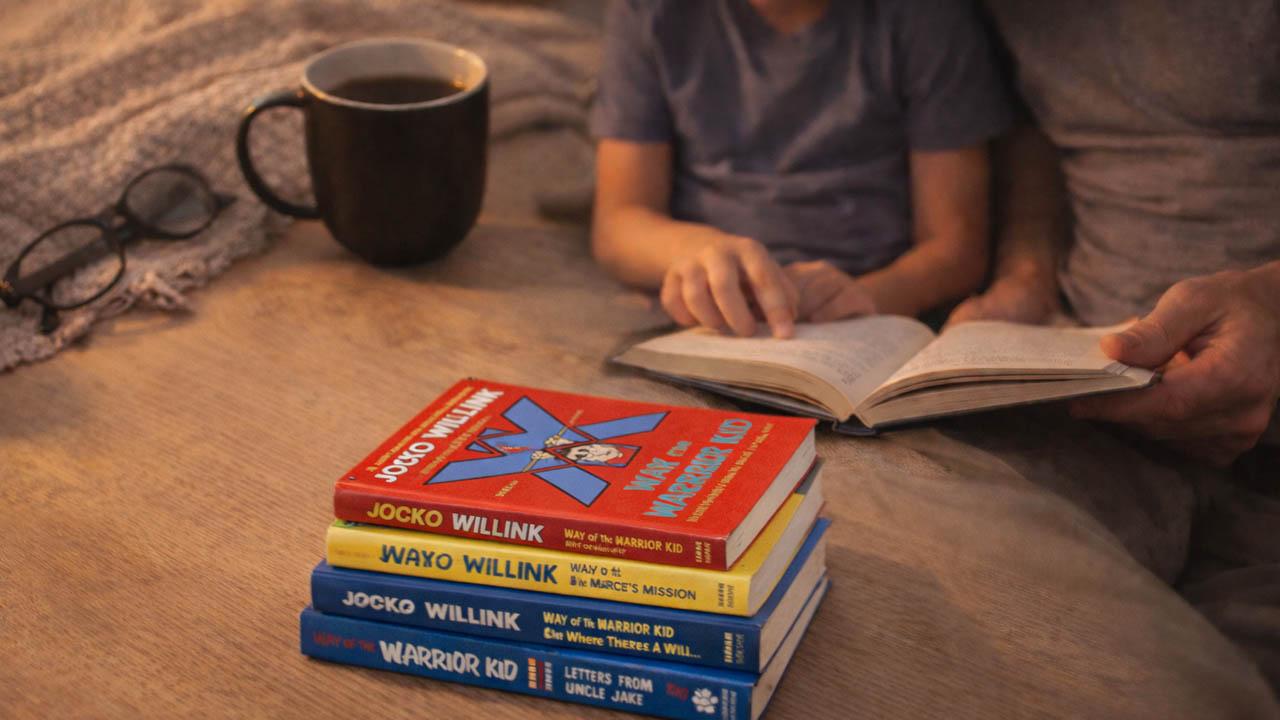
Although written for children, the Way of the Warrior Kid series contains powerful lessons that apply to adults just as much:
- You can do hard things
- Confidence is built through action, not avoidance
- Small daily choices compound over time
- Courage is a skill that can be practiced
As a therapist and a parent, I appreciated how these books normalize discomfort as part of growth—without shaming or pushing. That’s a message many adults never received growing up.
Bringing This Into the New Year
As the new year approaches, I’m not encouraging extreme resolutions or unrealistic expectations. What I am encouraging is reflection:
- Where is a little more structure actually supportive for you?
- What habits help you feel more regulated, grounded, and present?
- If your time reflects your values, what would need to shift?
Jocko Willink’s work, especially Extreme Ownership, the Way of the Warrior Kid series, and the podcast episode “You Don’t Get One More Minute”, offers a powerful reminder:
Your life is built in the small, consistent choices you make when no one is watching.
From a mental health perspective, that’s not pressure, it’s possibility.
If you’d like help identifying what healthy discipline looks like for you (not someone else), therapy can be a supportive place to start. You don’t need to do everything. You just need to begin…intentionally.
Credit & Attribution
All credit for the concepts of “discipline equals freedom,” extreme ownership, and the ideas discussed above belong to Jocko Willink and his body of work. This post reflects my clinical interpretation and application of these ideas for mental health and personal growth.
Bailey Lanier
Bailey Lanier is a Licensed Professional Counselor who works with individuals, couples, and families navigating anxiety, trauma, life transitions, and developmental challenges. She is a certified anxiety and trauma treatment provider with advanced training in Trauma Focused Cognitive Behavioral Therapy and Motivational Interviewing. Bailey draws from skills based counseling, Family Systems work, and CBT to support holistic healing.
Her experience spans schools, inpatient settings, outpatient care, and university teaching. She has also invested years serving families through her church and missions work. Outside the office, Bailey enjoys time outdoors with her husband, their two sons, and two bonus children.